

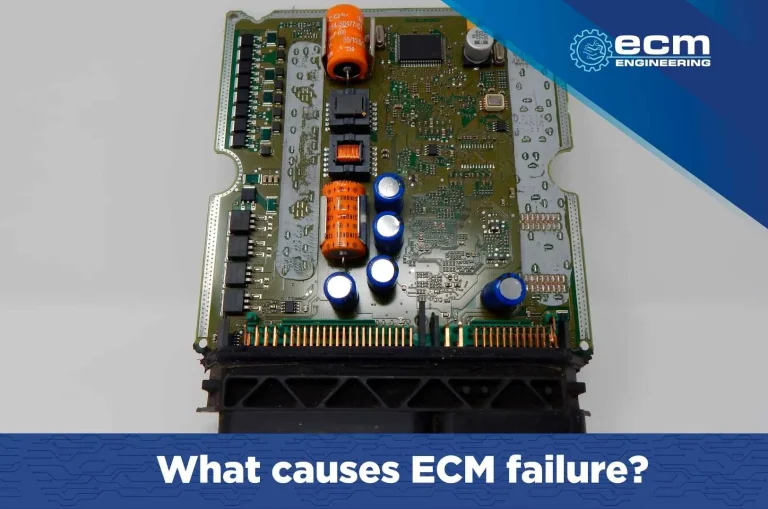
Introduction
The Engine Control Module (ECM) is the central electronic controller responsible for managing critical engine functions such as fuel injection, sensor monitoring, and emission control.
When the ECM fails, the vehicle may experience multiple problems including starting issues, communication errors, loss of engine performance, or complete engine shutdown. Because the ECM is connected to many sensors and actuators throughout the vehicle, identifying the true cause of ECM failure can sometimes be challenging.
Understanding the most common sources of ECM failure can help technicians perform more accurate diagnostics and prevent costly misdiagnosis.
What is an ECM?
Before we dive into the causes of ECM failure, let’s first understand what an ECM is and what it does. As mentioned earlier, an ECM is a computer that controls various engine functions. It uses input from sensors throughout the engine to determine the appropriate fuel and air mixture, ignition timing, and other parameters necessary to operate the machine.
The ECM receives input from various sensors, including the oxygen, mass airflow, and throttle position sensors. It then uses this data to adjust the engine’s operation, ensuring it operates efficiently and reliably. The ECM is also responsible for monitoring the engine for issues and triggering warning lights or alerts if there is a problem.
Common Causes of ECM Failure
Now that we understand what an ECM is and what it does let’s explore the common causes of ECM failure.
1. Water Damage
Water damage is one of the most common causes of ECM failure. Water can enter the ECM through various sources, including a cracked engine block, a leaky windshield, or a clogged sunroof drain. Once water enters the ECM, it can cause corrosion on the circuit board, leading to failure. Water can also short out the ECM’s electrical components, leading to failure.
2. Voltage Spikes
Voltage spikes can occur when a sudden increase in the electrical voltage within the vehicle’s electrical system. Various factors, including a faulty alternator or a failing battery, can cause these spikes. Voltage spikes can damage the ECM’s electrical components, leading to failure.
3. Heat Damage
Heat damage is another common cause of ECM failure. The ECM is located in the engine compartment, where temperatures can reach extreme levels. If the engine overheats, the ECM can be damaged. Heat can cause the ECM’s electrical components to expand and contract, leading to failure. Over time, the heat can also cause the ECM’s circuit board to warp, leading to failure.
4. Age and Wear
ECMs, like any other component in a vehicle, can wear out over time. As the ECM ages, its electrical parts can become worn, leading to failure. The ECM’s circuit board can also become worn, leading to loss.
5. Improper Installation
Improper installation of an ECM can also cause failure. If the ECM is not installed correctly, it can become damaged during installation, leading to failure. Additionally, if the ECM is not programmed correctly, it can cause engine operation issues, leading to failure.
6. Power Surges
Power surges can occur when a sudden increase in electrical power within the vehicle’s electrical system. Various factors, including a faulty alternator or a failing battery, can cause these surges. Power surges can damage the ECM’s electrical components, leading to failure.
7. Faulty Sensors
Faulty sensors can cause the ECM to receive incorrect data, leading to engine operation issues. If the ECM receives erroneous data, it may adjust the engine’s operation, which can cause damage. Over time, this damage can lead to ECM failure.
8. Corrosion
Corrosion in the ECM’s electrical components can cause failure. Corrosion can occur due to exposure to moisture or other environmental factors.
Over time, corrosion can cause several types of damage to an ECM (Engine Control Module).
In summary, corrosion can damage an ECM in several ways, including causing electrical shorts, component failure, circuit board damage, and connector damage. It is essential to take steps to prevent corrosion from occurring and to regularly inspect and maintain the ECM to ensure it continues functioning correctly.
Electrical Problems That Lead to ECM Failure
The ECM depends on a stable electrical system to operate correctly. Sudden voltage spikes or unstable power supply can damage sensitive electronic components inside the module. Electrical problems that commonly affect ECM operation include:
- Alternator voltage spikes
- Incorrect jump-start procedures
- Battery failures or weak battery cells
- Short circuits in wiring harnesses
When these electrical problems occur, the ECM may lose communication with other modules or stop controlling engine functions correctly.
Main Sources of ECM Failure
| Failure Source | Description | Possible Result |
|---|---|---|
| Electrical Surges | Voltage spikes from jump starting or faulty alternators | Damage to internal electronic circuits |
| Moisture Intrusion | Water entering the ECM housing due to leaks or damaged seals | Corrosion and electrical shorts |
| Wiring Harness Damage | Broken or corroded wires affecting communication signals | Intermittent faults or no communication |
| Overheating | High temperatures inside the engine compartment | Degradation of internal electronic components |
Technicians who want to understand more about electronic module failures can also read our guide on the most common source of ECM failure, where we explain how environmental damage affects engine control modules.
Frequently Asked Questions About ECM Failure
What is the most common cause of ECM failure?
Moisture intrusion and electrical voltage spikes are among the most common causes of ECM failure. Water damage can corrode internal circuits, while voltage surges may damage electronic components.Can a faulty battery damage the ECM?
Yes. Weak batteries, poor grounding, or unstable voltage can affect the ECM’s power supply and potentially damage the module over time.How do I know if my ECM is failing?
Typical symptoms include engine starting problems, loss of communication with diagnostic scanners, random warning lights, or irregular engine performance.Can an ECM be repaired instead of replaced?
In many cases ECM modules can be professionally repaired by specialized electronic repair facilities that restore damaged internal circuits and communication functions.
Armando Donado is an automotive electronics specialist and entrepreneur with extensive experience in engine control systems, ECU diagnostics, and electronic module repair. He is the CEO of ECM Repair USA, a company specialized in professional ECM diagnostics, programming, and repair services for diesel and gasoline vehicles.
He is also the founder and CEO of Autosoporte, a technical training academy focused on advanced automotive diagnostics, ECU repair, and electronic systems training for professional technicians across North and Latin America.
Through his work in both technical training and electronic module repair, Armando has helped technicians and workshops develop advanced diagnostic skills for modern vehicle electronics.


